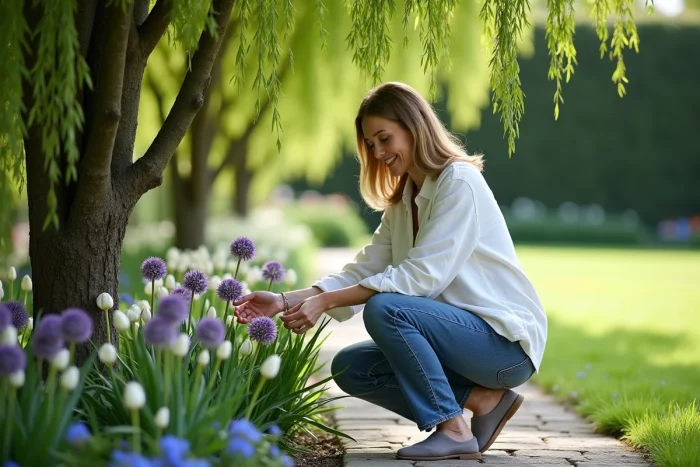
The combination of an ornamental shrub with original flowering and perennials or ground covers requires more than just a concern for aesthetics. Companion planting errors often lead to growth imbalances or a loss of color over several seasons.
Some companion plants, reputed to be robust, actually prove sensitive to root competition or shade. Yet, some less expected alliances promote the flourishing of variegated foliage and extend the decorative interest of a bed. The following examples are based on recent experiences and feedback from amateur gardeners.
Why does the stemmed shrimp willow attract so many garden enthusiasts?
It is impossible to ignore the fascination that the stemmed shrimp willow evokes in gardens across France. From spring to autumn, this hardy shrub imposes its compact and airy silhouette at the heart of both contemporary designs and classic flowerbeds. Its variegated foliage, ranging from soft pink to bright white, catches the eye as soon as spring awakens. The pink then white variegation, a signature of the variety, brightens up the beds even under a gray sky.
The flexibility of its compact form and ease of cultivation explain the enthusiasm of enthusiasts. Low-maintenance and tolerant of pruning, this salix shrimp willow adapts to many soils and supports, naturally structuring the flowerbed. Its hardiness makes it a reliable ally, resistant to harsh winters as well as early heat.
Enthusiasts praise the ornamental interest of its foliage, which evolves and can transform the atmosphere of a space throughout the year. In spring, the young shoots tint the garden with pink hues; in summer, the white variegation illuminates shaded areas; in autumn, the green hue enriches with golden tones. Its ability to maintain a certain volume even in winter structures the compositions, whether integrating a bed with stemmed shrimp willow or creating a striking contrast with purple-leaved perennials.
Lightness, brilliance, ease of maintenance: the stemmed shrimp willow combines all these qualities to attract gardeners looking for a graphic, evolving plant that is easy to pair.
Which plants to choose to enhance a bed around a stemmed shrimp willow?
Creating an elegant and colorful flowerbed with a stemmed shrimp willow is primarily about selecting perennials and shrubs that can provide depth without overshadowing the star. The harmony of shapes, diversity of textures, and a succession of blooms prolong the interest of the bed over the months.
To create a dense and contrasting base, purple-leaved heucheras are invaluable allies. Their dark hue highlights the pink and white of the willow while stabilizing the decor at the base. Beside them, perennial geraniums offer a generous bloom, often pastel or blue, while effectively covering the ground, extending the fresh effect from spring to summer.
Those who appreciate well-maintained atmospheres can incorporate a Japanese maple, whose finely cut leaves complement the delicacy of the shrimp willow. A few touches of yellow flowers, coreopsis, and yarrow inject energy and light, while asters and Japanese anemones take over for the autumn note.
Here are some associations to consider for rhythm in your bed:
- Heucheras: persistent foliage, purple or silver, that ensures the framework of the bed all year round
- Perennial geraniums: their sprawling habit and long bloom add cohesion to the composition
- Japanese maple: a refined structure, perfect for playing with contrasts of shapes
- Yellow flowers: to inject light and energize the colors
- Asters, anemones: the final touch for autumn, when the garden softens
Some white pebbles, a layer of bark, or mineral mulch can highlight the volumes and preserve moisture. These well-thought-out alliances offer balance, movement, and appeal throughout the year, transforming each bed with shrimp willow into a true vibrant and colorful scene.
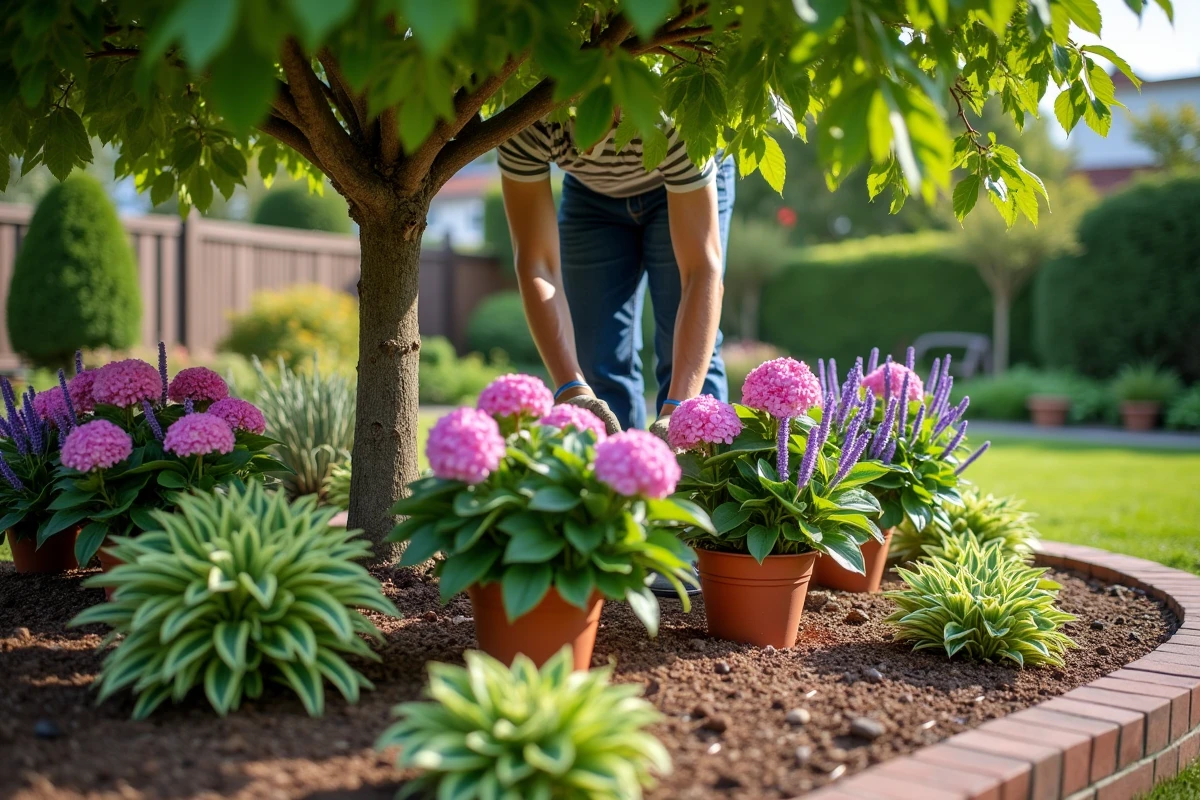
Successful atmospheres: creative ideas for an elegant and colorful bed all year round
Shades and rhythms for a lively bed
The flowerbed around the stemmed shrimp willow quickly becomes a playground for the eye. Betting on several color ranges, from the soft pink of spring to the purple foliage of perennials, allows for the creation of a lively composition, where each season finds its place. The succession of blooms, diversity of textures, and variation in heights rhythm the scene and keep the eye engaged. One moves from a vibrant spring to a bright summer, then to a muted autumn, without ever falling into monotony.
Here are a few points to keep in mind to optimize the visual effect and longevity of the bed:
- Staggered blooming thanks to perennials chosen for their differentiated cycles
- Reasoned maintenance: regular pruning encourages the appearance of new colorful shoots
- Water management and plant mulch to maintain soil freshness
Structuring and animating the flowerbed
For a structured effect, heucheras and low grasses outline the base and emphasize the silhouette of the willow. A few yellow flowers during summer, blue asters in autumn: by varying heights and shades, the bed gains depth. Maintenance follows the rhythm of the seasons: reduce watering as autumn approaches, protect the base during the first cold snaps, and that’s it. This organization allows each plant to express itself without competing, all within a coherent dynamic. Even in winter, the structure of the willow and the persistence of certain foliage ensure the presence of the bed, ready to welcome a new cycle of colors as soon as the first sunny days arrive.