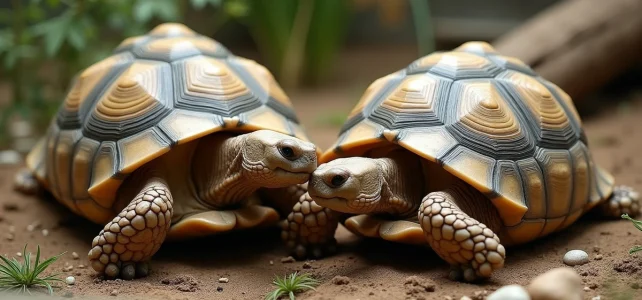
Turtles, despite being known for their placidity, can exhibit aggressive behaviors towards their peers, even going so far as to bite. This phenomenon affects both terrestrial and aquatic species, regardless of age or sex.
Aggression among peers is not systematic but occurs in specific contexts related to the environment, health, or social hierarchy. Several signs can help anticipate these tensions and adapt living conditions to limit injuries and stress within a group.
Understanding Aggression in Turtles: A Natural or Worrisome Behavior?
Seeing a turtle attack another can be surprising. However, among land turtles, these bursts of aggression are part of their social repertoire, especially when cohabitation involves multiple individuals, and even more so, multiple males. Whether it’s the Hermann’s tortoise or other species of land turtles, territorial rivalry often manifests through targeted bites: on the hind legs, shell, and sometimes even more sensitive areas. Conflicts, far from being random, often reflect a struggle for power.
During the breeding season, tensions escalate even further. Males seek to assert their presence, defending their access to females with sometimes brutal aggression. Biting then becomes a tool of intimidation, or even exclusion. Young turtles dispute living space; adults focus on reproduction. Each age, sex, and temperament has its own codes and battles.
Understanding Biting in Turtles requires paying attention to group dynamics, identifying warning signals: sudden movements, chases, jaw snapping. The condition of the turtle shell and limbs tells the story of past tensions. Adapting the habitat, providing more space, hiding spots, and separating the more dominant individuals reduces the risks of injury and stress. Considering the communal life of several land turtles involves taking into account the number, sex, temperament, and even the social history of each.
What Are the Main Causes of Biting Among Peers?
When several turtles share an aquarium or a cold enclosure, tensions can quickly arise. The origins of this behavior are multiple. Competition for space remains a major factor:
- A tank that lacks surface area,
- Disputed hiding spots,
- Limited access to light
foster rivalries and biting. In the Florida turtle, known for its strong reaction to overcrowding, this phenomenon is particularly pronounced if the group is too dense.
Feeding also plays a role. An unbalanced diet, irregular distribution, or deficiencies can make animals more nervous. Whether they are herbivores, carnivores, or omnivores, all turtles defend their share, especially if food becomes scarce. On the eve of pre-hibernation, or if hibernation does not go well, stress levels rise, making interactions more tense.
Here are some examples of issues that exacerbate tensions:
- Significant weight loss
- Presence of internal parasites
- Chronic health problems
weaken turtles and alter their behavior towards their peers. Stress can stem from forced proximity, an unstable environment, or even interactions with other animals such as dogs or cats. Consulting an expert can help prevent conflicts and protect the stability of the group.

Recognizing Signs of Stress and Easing Tensions in the Terrarium
In the enclosed environment of the terrarium, every detail matters for the group’s balance. Turtles, whether from land or water, signal their discomfort through specific manifestations. Sunken eyes, a damaged shell, or skin issues are indicators not to be overlooked. An injured limb, sudden anorexia, or rapid weight loss should alert the attentive caretaker. Also watch for behaviors: prolonged immobility, refusal to eat, repeated attacks on companions. These signals can sometimes reflect a lack of calcium, vitamin A, or vitamin D3. A deficit in UVB, essential for the good health of turtles, increases the risk of shell deformities.
To reduce tension, adapt the habitat. Provide different shelters, shaded areas, and varied terrain textures. A varied diet, enriched with calcium and supplemented with vitamins, decreases pressure around food. Water should remain clean, and the substrate dry for terrestrial species. In case of problems, separate the more aggressive individuals or those that seem weak.
Vigilance remains the best protection. At the slightest doubt, deep wounds, persistent diarrhea, or infections, consult a specialized veterinarian or a herpetologist. Treat irritated eyes with saline solution, check the effectiveness of UVB lamps, and seek advice from professionals from veterinary clinics or institutions such as the zoo: these are all reflexes that ensure the well-being of the group. Preventing turtle aggression ultimately means learning to read their language, to provide them with a living environment where cohabitation does not equate to confrontation.