More than half of the French people report having given up at least once on a leisure outing due to rising prices, according to a survey reported by Les Dernières Nouvelles d’Alsace in September 2026. This budget constraint is reshaping the landscape of leisure activities: people are looking for shorter, closer, and more engaging formats.
The leisure trends of this year are not just a list of new offerings; they reflect a change in attitude towards free time.
Cycling trips and outdoor leisure: practices that structure vacations
Cycling trips are no longer a niche activity reserved for seasoned athletes. A French survey conducted in August 2026 shows a strong intention to go again among those who have already tried the experience, while beginners express marked interest. Expectations focus on price, bike security, and accommodation facilities.
In concrete terms, cycling trips are becoming a structuring leisure activity, not just a mode of transportation. One plans an itinerary, books suitable accommodations, and anticipates cultural or gastronomic stops. This format aligns with the trend towards shorter and closer stays observed in the 2026 vacations.
In the broader outdoor category, vacationers are redirecting their plans towards the countryside, cities, or mountains, at the relative expense of traditional coastal destinations. This shift favors activities such as hiking, trail running, and nature walks, which do not require a heavy budget and adapt well to two or three-day stays. You can regularly find leisure news on HyperScoop to spot these short and accessible formats.

Indoor complexes and escape games: the growth of urban leisure in France
The principle of multi-activity indoor complexes is simple: bring together trampoline, climbing, virtual reality, bowling, and dining under one roof. The model works because it attracts different audiences during the same time slot, from families to groups of friends to corporate seminars.
The escape game remains a pillar of urban indoor leisure. The format has matured. We no longer just talk about locks and paper puzzles. The rooms incorporate mechanical devices, immersive decor, and sometimes virtual reality to renew the experience. Feedback varies on the quality from one establishment to another, but demand remains strong.
Virtual reality: beyond the gadget
Virtual reality is establishing itself firmly in the leisure sector in France. Dedicated centers offer experiences that go beyond simple video games: heritage tours, sports simulations, educational pathways. These formats are now integrated as a full component of the leisure landscape, not just a seasonal curiosity.
Leisure budget: how the French make choices in 2026
The reported sacrifices by households coexist with a specific phenomenon: people spend more per outing, but go out less often. The trade-off is made on frequency, not on the quality of the experience.
The 2026 vacations illustrate this logic. Stays are shorter, booked later, and oriented towards nearby destinations. Camping, private rentals, and weekend micro-adventures are gaining ground against all-inclusive packages.
- Cultural outings (museums, festivals, theater) are declining, hindered by lack of availability, declared disinterest, and fear of crowds.
- Short outdoor activities (hiking, cycling, nature walks) are on the rise because they combine low cost and flexible timing.
- Indoor leisure (escape games, multi-activity complexes, VR) capture an increasing share of the budget thanks to their “event outing” format lasting two to three hours.
Creative leisure and local experiences: rising activities
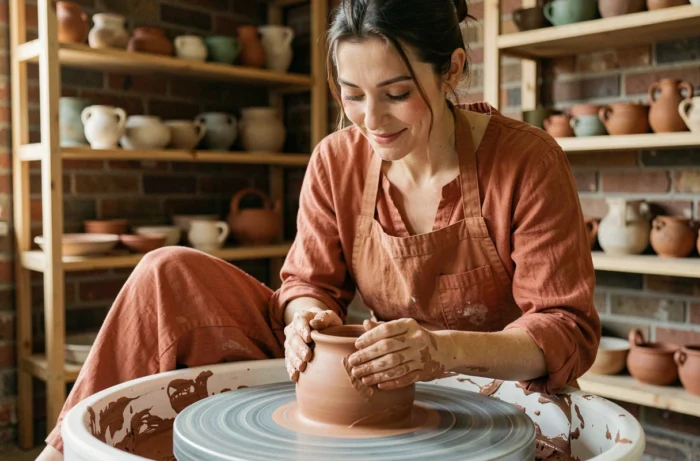
Creative leisure is experiencing a resurgence of interest that goes beyond simple Pinterest trends. Pottery, embroidery, watercolor, sewing: these practices are organized around in-person workshops, often led by local artisans or associations. The two-hour workshop format is appealing because it produces a tangible result, unlike many digital experiences.
Experiential tourism follows the same logic. One no longer just visits a place; one does something there: regional cooking classes, initiation to a craft skill, participatory grape harvesting. The leisure sector in France integrates these micro-experiences as a lever for attendance, including for parks and heritage sites looking to renew their offerings.
Creative leisure fairs and events
Fairs dedicated to handmade creations attract a loyal and growing audience. These events act as accelerators: one discovers a technique, buys the materials, and leaves with a project. For companies in the sector, it is a more effective customer acquisition channel than online advertising because physical contact with the product triggers the purchase.
Screens and digital leisure: screen time influencing choices
Between streaming and social media, screens occupy a significant place in daily life. This observation has a direct consequence on the leisure market: the activities that succeed are those that offer a clear break from the screen. Escape games, manual workshops, nature outings, and cycling trips share a common point; they require physical engagement.
Amusement parks have understood this. New attractions focus on sensory immersion rather than technological excess. Futuroscope, for example, explores narrative formats that engage the body and senses, not just the eyes. The French market remains a permanent testing ground for these hybrid formats.
The leisure sector in France is undergoing a phase of reorganization, not decline. The activities that are growing are those that meet three simultaneous criteria: a controlled budget, a short duration, and a physically engaging experience. The rest, long, expensive, or passive formats, are under pressure from both inflation and competition from screens.