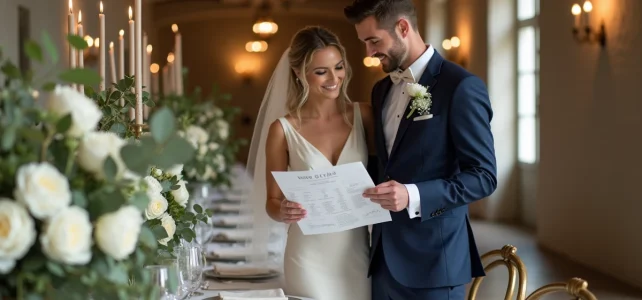
A successful wedding relies less on the number of service providers involved and more on methodical balancing between high emotional value items and adjustable expenses. With the pressure on purchasing power observed since 2024, we find that couples who structure their organization around clear priorities achieve a perceived experience equivalent to, or even better than, that of poorly allocated larger budgets.
Budget allocation for a wedding in a constrained purchasing power context
The first technical mistake we observe: dividing the budget equally among each item. The venue and catering absorb the majority of expenses. Everything else (decorations, music, stationery, guest gifts) constitutes an adjustment envelope that must be treated as such.
We recommend first setting a firm ceiling for the venue and catering, then distributing the remainder. This approach avoids the cascading effect where each vendor “nibbles” at the budget without any item being truly satisfactory.
Prioritize items with direct emotional impact: the quality of the meal and the atmosphere of the evening matter more in the guests’ memories than stationery or centerpieces. A local caterer working with seasonal products often costs less than a generalist event caterer, resulting in superior taste.
Several couples who structured their approach through Party Wedding organization confirm that locking in the venue and caterer first alleviates mental load for creative items.
Low-cost local vendors: selection criteria for a no-compromise wedding

A local vendor is not a discount vendor. Photographers, florists, DJs: their pricing reflects lower travel costs and a deep knowledge of local venues. The challenge is to distinguish the affordable vendor due to cost structure from the discount vendor due to lack of experience.
- Check the number of weddings held at the venue you have chosen. A vendor who knows the venue saves time during setup, resulting in a lower actual hourly rate.
- Always request a detailed line-by-line quote. “All-inclusive” packages often hide services you won’t use (digital guest book, complimentary engagement session but charged indirectly).
- Favor vendors who accept shorter formats. A photographer present for six hours instead of ten, a DJ covering the evening without the cocktail hour: adapting the service duration reduces costs without affecting key moments.
Since decree n°2024-1478 of December 20, 2024, non-professional vendors involved in a reception (friend DJ, amateur caterer) must be declared in advance. This obligation aims at food and acoustic safety. If you enlist a friend for the meal or music, inquire about the declaration formalities to avoid any disputes on the big day.
Micro-wedding and reduced format: an underestimated budget lever
The trend towards micro-weddings (fewer than fifty guests) has significantly strengthened since mid-2025. Millennial couples opting for this format report a notable reduction in organizational stress and a much deeper personalization of every detail.
Fewer guests means a higher budget per person at a constant envelope. With thirty guests instead of one hundred, the same overall budget allows for a gourmet menu, an unusual venue (winery, farmhouse, renovated barn), and carefully curated decorations. The satisfaction/euro invested ratio changes radically.
For distant relatives, live streaming via secure platforms has become a favored solution since 2024. This hybrid format expands the wedding audience without burdening logistics or catering budget. A simple stabilized smartphone and a good connection are sufficient.
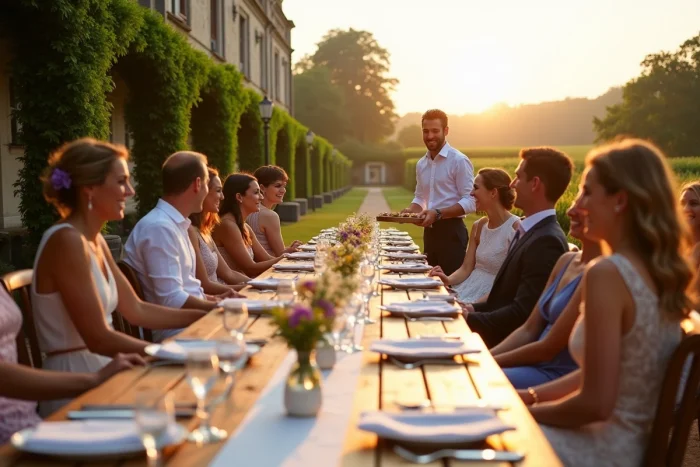
Eco-friendly wedding evening: concrete choices that enhance the experience
Eco-friendly weddings are not an aesthetic concession. Since 2025, feedback shows that these formats surpass traditional themes in guest satisfaction. The reason is pragmatic: a zero-waste local menu offers fresher products and a more pronounced taste than a standardized service delivered in a refrigerated truck.
Renting reusable tableware (plates, glassware, cutlery) is a better alternative to high-end disposables. The cost is comparable, sometimes lower, and the visual effect on the reception table is significantly superior. Some local rental companies even offer delivery, setup, and pickup the next day.
In terms of decoration, locally grown seasonal flowers cost less than imported varieties. A nearby florist can create arrangements with plants picked that very morning, ensuring optimal freshness throughout the ceremony and evening.
Evening planning: structuring the tempo to maintain energy
A successful wedding evening relies on precise sequencing. We recommend scheduling key moments (entrance of the couple, speeches, first dance, wedding cake) at regular intervals to avoid energy lulls.
- Limit speeches to three or four interventions of five minutes maximum. Beyond that, attention wanes and the evening’s dynamic deteriorates.
- Place the first dance before dessert, not after. Guests are more willing to dance before finishing their meal, and this reignites the rhythm for the rest of the evening.
- Plan a quiet space (chairs, dim lighting) away from the dance floor. A well-thought-out relaxation area extends guests’ presence by several hours, especially for older guests.
The last point we consistently observe: couples who communicate their schedule to the DJ, caterer, and photographer in advance achieve smooth coordination on the evening itself. A simple shared document, updated a week before the date, is enough to align all participants without resorting to a wedding planner.