
By 2030, more than 85% of jobs that will exist have not yet been invented, according to a study by the think tank Institute for the Future. Yet, companies remain attached to traditional profiles, despite the rise of hybrid and transversal skills.
Automation, artificial intelligence, and the ecological transition are disrupting the structure of organizations. Professions are evolving at an unprecedented pace, rendering certain expertise obsolete while new needs emerge, sometimes contrary to established logics.
Societal changes and transformations in the professional world: understanding the new challenges for organizations
The digital transformation leaves no sector untouched. Driven by new technologies and the necessity for a sustainable future, companies are readjusting their models, sometimes forcefully. In France, this shift redefines every step: recruitment, skills development, talent management. Management, faced with the acceleration of economic cycles, finds itself confronted with unprecedented dilemmas: should they cling to old methods or take the risk of reinventing everything?
It is now impossible to separate traditional functions from new jobs. A dual dynamic is emerging: old positions coexist with profiles at the intersection of several fields. Here are some concrete examples of these new roles that are emerging at the crossroads:
- data analysis,
- impact project management,
- engineering for ecological transition.
Take the U-shaped job, which has become emblematic: it requires both sharp technical expertise and the ability to navigate between sectors. This interface capability reflects the urgency of breaking down silos in skills and imagining less linear, more open career paths.
In the face of this reorganization, companies are moving towards a dynamic management of organizational skills: they focus on agility, encourage continuous training, and cultivate the reflex to adapt. This strategy gives them a head start to absorb shocks, remain competitive, and prepare their teams for upcoming upheavals. In a context where innovation must engage with social responsibility, France is seeing the emergence of new frameworks and rethought governance models. This is not just a simple adjustment: it is a profound transformation of the rules of the professional game.
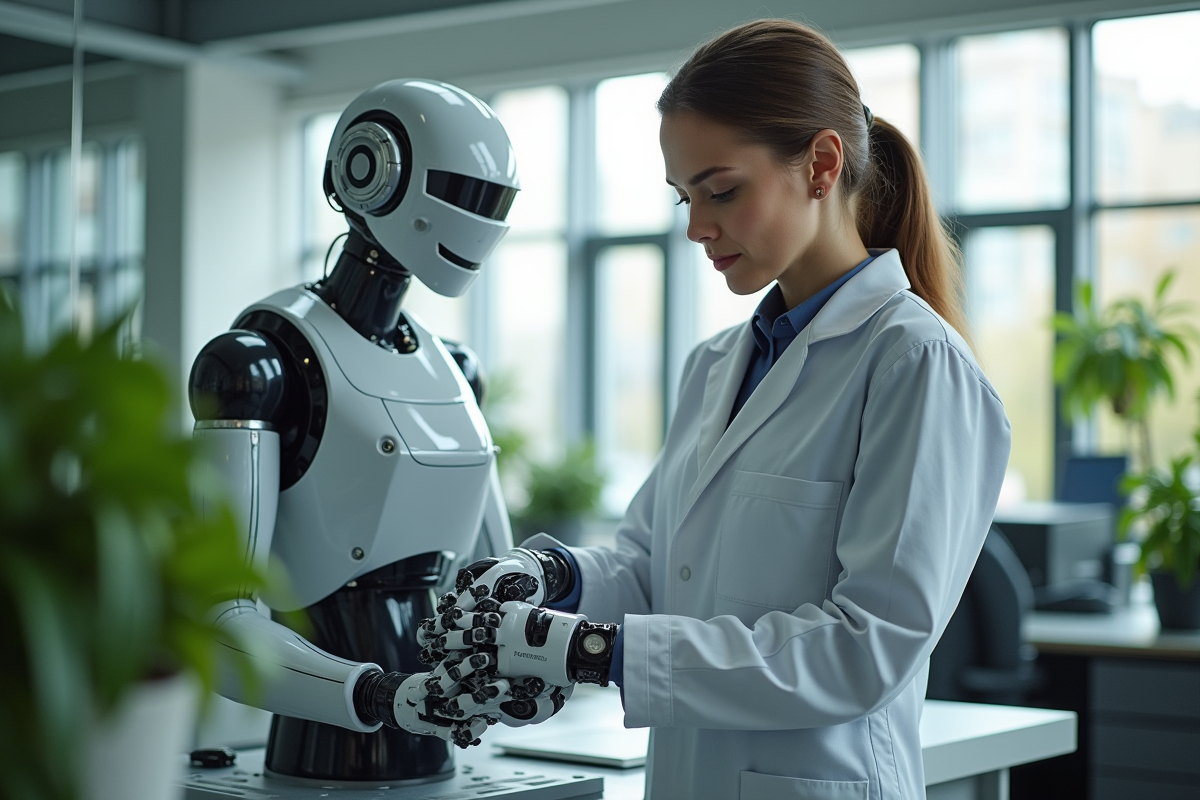
What skills are needed to adapt and thrive in the economy of tomorrow?
New skills are becoming central to professional daily life, shaking up benchmarks and even career management. In the face of the speed of change, organizations are now looking for an unprecedented combination of technical know-how and human qualities. The ability to learn quickly, to question one’s methods, are now the foundations of a skills portfolio that evolves with market needs.
Agility, critical thinking, creativity: these transversal skills are gaining a prominent place, well beyond usual specializations. Companies want to anticipate changes; they value autonomy, the ability to manage complex projects, and a sense of teamwork. Working in teams in multicultural or hybrid environments is now part of the expectations, just like managing uncertainty.
To better identify the sought-after skills, here are the main areas that make a difference:
- Behavioral skills: adaptability, initiative, work ethic.
- Organizational skills: time management, cooperation between professions, ability to drive change.
- New skills: advanced mastery of digital tools, intelligent data exploitation, deep understanding of issues related to sustainable transition.
Professional development actors confirm: building a sustainable career requires continuously renewing one’s skills and being open to varied learning experiences. France, attentive to these transformations, is multiplying initiatives to support employees and companies in this movement. This collective dynamic encourages everyone to not just endure transformations but to become an active participant.
In this new landscape, one certainty stands out: tomorrow belongs to those who dare to change their perspective and challenge the boundaries of their profession.