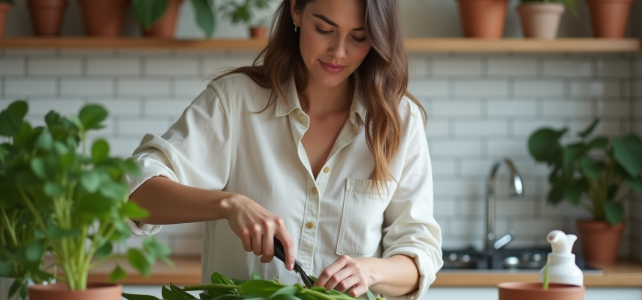
Detaching a cutting does not guarantee the appearance of roots. Some species stubbornly refuse to multiply, even when placed in ideal water or soil. Conversely, a simple fragment forgotten on a windowsill sometimes takes root against all odds.
Seemingly trivial mistakes can jeopardize success, while simple actions can significantly increase the chances of success. The methods vary depending on the type of plant, the season, or the materials used. Specific recommendations help avoid repeated failures and facilitate progress, even without prior experience.
Related reading : Tips and Tricks for Successfully Organizing the Perfect Wedding and Reception
Propagating indoor plants: why it’s easier than you think
Taking cuttings from an indoor plant is neither witchcraft nor a task reserved for seasoned botanists. The idea is to take a piece of the mother plant, place it in a suitable substrate, and let nature take its course. When spring or summer arrives, everything accelerates: growth is in full swing, and plant tissues respond quickly.
Cutting opens the door to the propagation of many varieties of indoor plants. Whether using a soft stem, a fleshy leaf, or sometimes even a root, each method has its specifics. Layering, division, or grafting require different techniques and knowledge; here, the rule is simplicity. All you need is a sharp pair of pruners, a container with light potting soil or some fresh water, and a few guidelines to get started.
Recommended read : When Citizen Initiatives Shape a More Supportive World
Some species can be stubborn, but the majority willingly tolerate the experience. Let’s take a concrete example: to successfully propagate an alstroemeria cutting, you need to adapt the technique to the structure of the plant and its growth rhythm. There is no shortage of advice for every type of gardener, with tips that make a difference.
In just a few weeks, a well-started cutting becomes a new plant in its own right. Watching the first roots appear, followed by young shoots, is the little miracle of indoor gardening. This practice adds a lively and experimental dimension to the space, transforming each successful cutting into proof of plant vitality.

Essential techniques and tips for successful cuttings at home
To propagate at home, a few essential actions and attention to the needs of each species make all the difference. Water propagation remains the most accessible method: take a healthy stem, remove the lower leaves, and place it in a transparent container filled with fresh water. Adding a piece of charcoal helps prevent rot. Depending on the plant, roots may start to appear in one to three weeks. When they reach about 3 cm, it’s time to plant them in suitable potting soil.
Here are some examples of plants that respond particularly well to these techniques:
- Coleus, tradescantia zebrina (misery plant), pilea peperomioides, monstera, and pothos readily lend themselves to water propagation.
- For succulents, cacti, aloe vera, echeveria, kalanchoe, it’s better to let the cut area dry for several days before placing the cutting in a dry substrate. This waiting period significantly reduces the risk of rot.
- Some plants, like begonia, sansevieria, or peperomia, can simply be propagated from a single leaf.
The choice of substrate is important to give the cutting every chance to root well. A mix of sand and peat, light and well-drained, remains a safe bet. Disinfected pruners, controlled humidity, and a mild temperature: every detail counts to stimulate root development. Humidity should remain stable, without excess standing water. When transplanting, delicacy is key, as young roots are fragile, and even the slightest clumsiness can jeopardize success.
Cutting is the playground of the patient gardener. Here, every action matters, and sometimes, a simple forgotten stem holds beautiful surprises. If perseverance prevails, the plant often responds in kind.