
15 milliliters, 12, 20: the tablespoon, in cooking, is far from being a universal unit. Between the brands of utensils and the differences between countries, precision fades away. The recommended quantities per person for rice, pasta, or meat? Again, each guide presents its own figures, far from any consensus.
Confusion between milliliters, centiliters, and grams: this is how dosage errors arise, synonymous with leftovers and waste. However, there are concrete methods to adjust quantities without complicating life. Applying them ensures more reliable preparations and a more serene daily cooking experience.
No more headaches: easily understand conversions and quantities in cooking
Mastering measurement conversions in cooking means accepting a rule of the game: each unit, milliliters, centiliters, grams, follows a strict logic. Yet, the transition from one to another destabilizes more than one cook, due to a lack of reliable references on measuring cups or spoons. When the success of an authentic recipe or an alternative recipe depends on the accuracy of a dosage, it’s better to know your equivalents: the question of 50 ml to cl keeps coming up. The detailed answer can be found on the page “Conversion de mesures en cuisine : comment passer de 50 ml à cl ? – Happy Space”.
To avoid discrepancies, there are concrete solutions. Reliable conversion charts are essential, especially for recipes that do not forgive approximation, such as tandoori chicken marinade. To convert 50 milliliters to centiliters, a simple calculation: divide by ten. On the equipment side, the electronic scale accurately measures dry ingredients, while the graduated measuring cup handles liquids. Take the tandoori spice mix: one gram too much or too little, and the flavor of the preparation changes.
Here’s how to succeed in your preparations every time:
- For a successful marinade, the texture should resemble that of a custard, neither too liquid nor excessively thick.
- Measuring precisely guarantees the right taste and texture of the chicken, whether it is roasted, grilled, or cooked on a griddle.
- Mastering conversions also helps limit food waste: each ingredient finds its place, without unnecessary surplus.
Staying on track with conversions and dosages transforms the preparation of the dish, from marinade to cooking. You can adapt the recipe to all diets, gluten-free, lactose-free, low GI, without sacrificing the pleasure of tasting. Precision then rhymes with creativity.
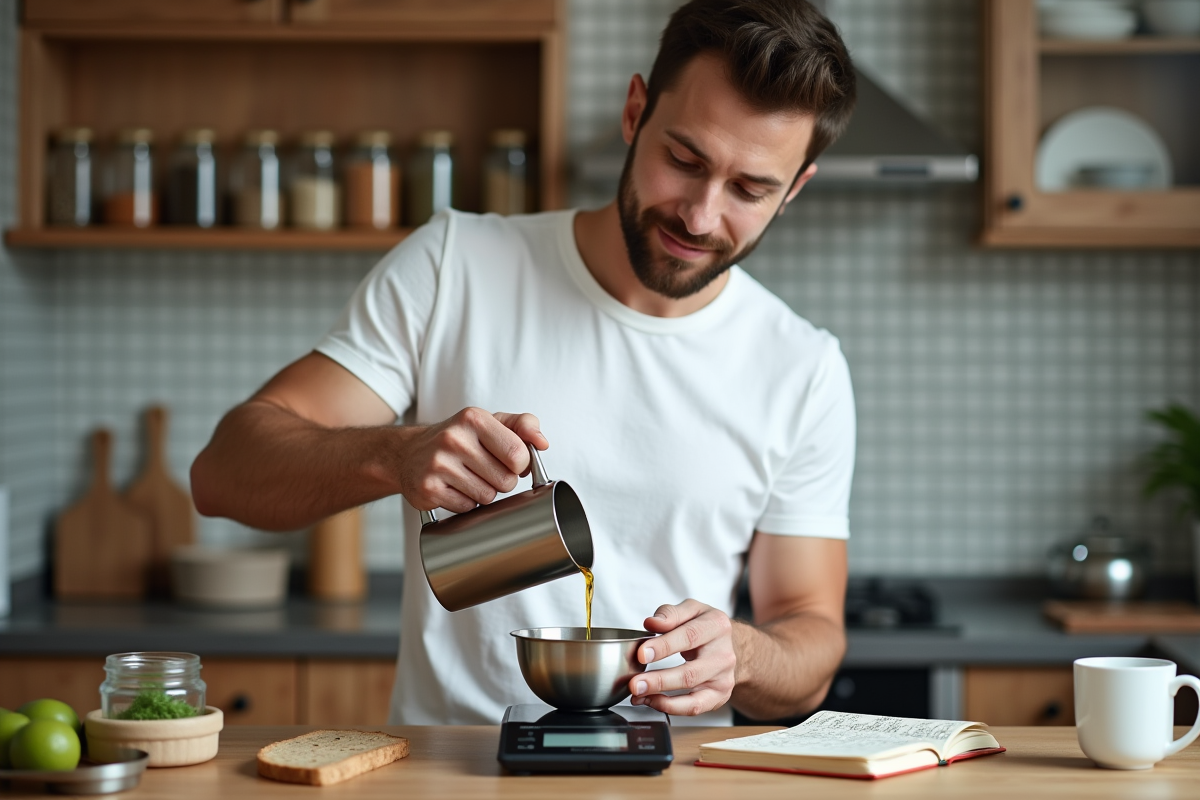
Concrete tips for accurate dosing, avoiding waste, and smart cooking every day
Choosing a precise dosage changes the perspective: cooking becomes a matter of method, but also of regained simplicity. Reliable measuring tools, measuring cups, electronic scales, calibrated spoons, structure each step, limit approximations, and enhance each ingredient. For a tandoori chicken marinade, for example, 50 milliliters of oil or vinegar makes the difference: success is written at this scale. Standard spoons then become invaluable for measuring paprika or tandoori spices, where excess erases all subtlety.
The fight against food waste begins with the precision of portions. Here are some concrete habits to adopt:
- Weighing basmati rice before cooking prevents cooking too much and leaving behind leftovers that are never reheated.
- To delight a large table, anticipate the distribution: stainless steel dishes or roasting pans help organize the cooking of chicken, in a hot or cold buffet version.
- Adjusting to the exact gram gives you the freedom to prepare just what is needed, without excess.
Mobile conversion apps make daily life easier: quickly calculate volumes, convert centiliters to milliliters, everything becomes simpler. This reflex, once acquired, helps limit waste. With each measurement, check, adjust, and seek the ideal texture: for a marinade, aim for the creaminess of a custard. Seasonings, mint sauce, or lemon are dosed in the moment, according to tasting, not according to habit. In the end, cooking balances on precision: each measure, each gesture, shapes the harmony of the dish and the meal, and makes you want to return, without wasting anything.