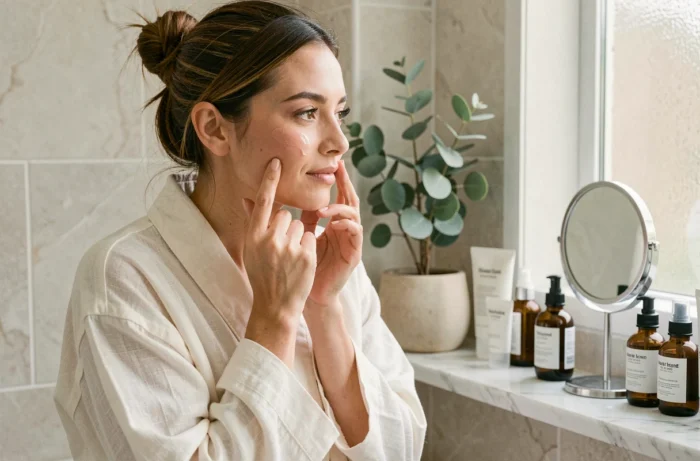
Your favorite anti-aging cream may have changed its formula without you knowing. Since November 1, 2025, the European regulation (EU) 2024/996 limits the concentration of retinol to 0.3% retinol equivalent in facial care products. This regulatory cap alters the composition of many products sold in Europe and pushes brands to rethink their formulations. Understanding these changes helps make more informed choices for your skin and daily balance.
Capped Retinol: What the European Regulation Changes for Your Facial Care
Have you noticed the mention of “retinol” on your serums or night creams? This anti-aging active ingredient, long a star of beauty routines, has recently come under strict regulation. Regulation (EU) 2024/996 sets a maximum threshold of 0.3% retinol equivalent for facial care. Non-compliant products can still be sold until May 1, 2027, but new formulations are already adhering to this limit.
In practical terms, this means that highly concentrated retinol serums are gradually disappearing from European shelves. Brands are compensating by combining retinol with other actives (bakuchiol, peptides, niacinamide) to maintain perceived effectiveness while staying within regulatory boundaries.
For consumers, reading labels becomes a useful reflex. Checking the percentage of retinol equivalent and spotting complementary actives allows you to distinguish a carefully reformulated product from a simple marketing adjustment. Resources like beautyhealth.be help compare compositions and better guide your skincare purchases.

Skin Barrier: Why Beauty Routines Are Changing Philosophy
For years, intensive exfoliation and layering powerful actives dominated beauty advice. This approach is giving way to an opposite logic: protecting the skin barrier rather than harming it.
The skin barrier is the outer layer of the skin. It retains moisture and blocks aggressors (pollution, cold, UV). When it is weakened by too many scrubs or acids, the skin reacts: redness, tightness, increased sensitivity.
A YouGov survey conducted in 2025 confirms this shift in consumer habits. Ingredient trends for 2026 prioritize hydration, prevention, and support for this barrier. Ceramides, hyaluronic acid, and nourishing plant oils are replacing aggressive peels in daily routines.
Building a Routine Focused on Protection
The principle is simple: fewer steps, but better chosen. Three steps are sufficient for most skin types.
- A gentle, sulfate-free cleanser that doesn’t leave the skin feeling “tight” after rinsing. An extreme feeling of cleanliness is often a sign of an agitated barrier.
- A moisturizing product suited to the season, richer in winter, lighter in summer. Ceramide-based formulas strengthen the cohesion of surface cells.
- A daily sunscreen, even on cloudy days. UV rays remain the primary cause of premature skin aging.
Reducing the number of products applied decreases the risk of reactions. This minimalist approach does not cost more and often yields better long-term results.
AI Personalization: Promises and Concrete Limits
Apps and brands now offer to analyze your skin through photos to recommend tailored skincare. Artificial intelligence identifies parameters (estimated hydration level, wrinkles, pigmentation spots) and generates a personalized diagnosis.
On paper, this is appealing. In practice, the reliability of these tools varies significantly from one app to another. The quality of lighting, the angle of the photo, and the type of phone sensor influence the results. A diagnosis made in the morning under natural light will not yield the same result as in the evening under artificial light.
These tools remain useful as a starting point. They help identify global trends (dry skin, oily T-zone) and ask the right questions. However, they do not replace a dermatologist’s opinion for specific issues like persistent acne, rosacea, or allergic reactions.
What an AI Tool Can and Cannot Do
An algorithm excels at cross-referencing large-scale data: compatible ingredients, textures suited to a skin type, coherent routines. It is less reliable for assessing a skin pathology or measuring the actual state of the skin barrier in depth.
Using AI as a pre-selection filter, not as a medical diagnosis, remains the right approach. This allows for time savings by eliminating clearly unsuitable products while maintaining a critical eye on recommendations.
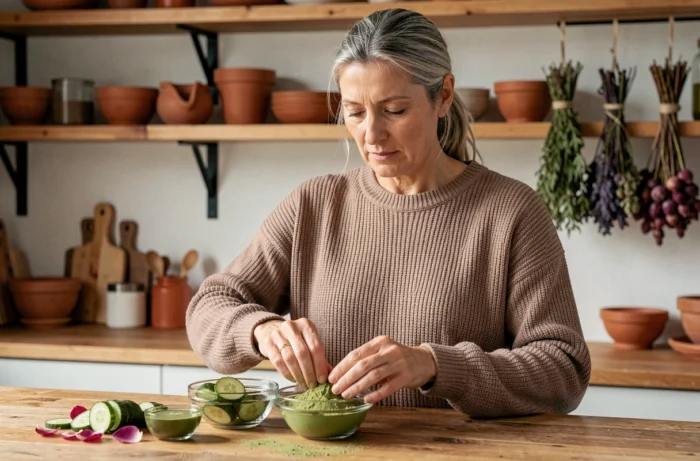
Sustainable Beauty Products: Beyond the Label, Check the Formulations
The mention of “natural” or “clean” on a package does not guarantee anything in itself. These terms do not have a uniform regulatory definition in Europe. A product can be labeled natural while containing synthetic preservatives or allergenic fragrances.
To make an informed choice, two reflexes are more useful than a label:
- Read the INCI list (the mandatory composition on the packaging). Ingredients are listed in descending order of concentration. If the highlighted plant oil appears at the end of the list, its presence is symbolic.
- Check the certification. Labels like Cosmos Organic or Ecocert impose specific requirements on the percentage of natural origin ingredients and manufacturing processes.
- Prefer refillable or recyclable containers. The environmental impact of a product is determined as much by the packaging as by the formula.
Sustainable beauty trends are gaining ground because consumers are asking more questions. This demand pushes brands to document their formulation and sourcing choices, benefiting the entire skincare market.
Recent beauty and well-being trends reflect a fundamental movement. The European regulation on retinol, the priority given to the skin barrier, and the arrival of personalization tools are concretely changing how we choose our skincare products daily. Reading labels carefully remains the most cost-effective gesture for your skin and your wallet.